
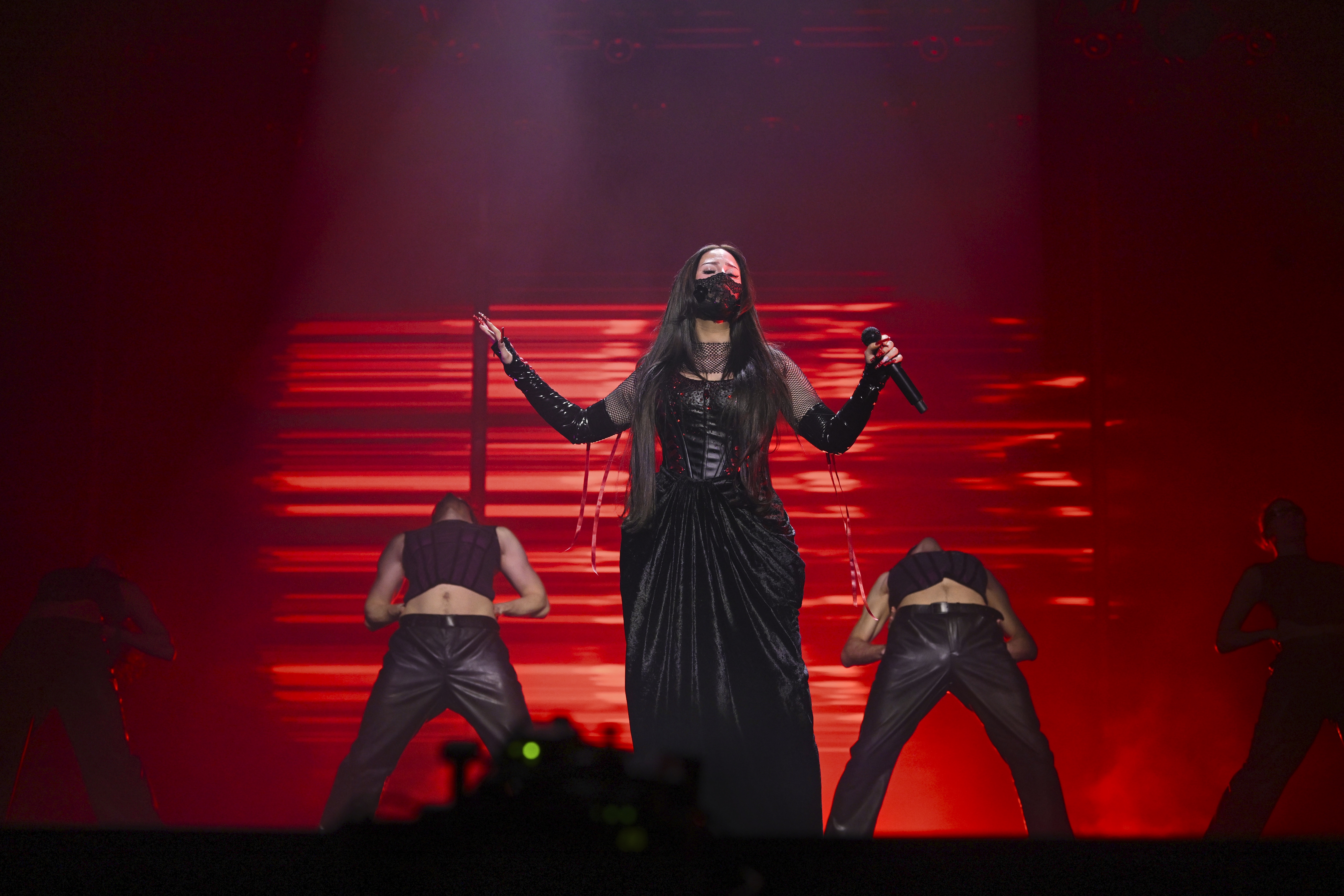
Martin Green, the Director of the Eurovision Song Contest, has had to intervene amid controversy surrounding comments made by Swedish entrant FELICIA about Israel.
FELICIA comments anger KAN
Following her win at Melodifestivalen 2026, FELICIA spoke out surrounding Israel’s participation in the Contest. This came following the General Assembly of the EBU back in December, where Israel’s participation was allowed after a vote on reforms was passed. The decision triggered immense backlash and led to the boycott of the Contest by Iceland, Ireland, the Netherlands, Slovenia and Spain.
After she won the selection, FELICIA – when asked about Israeli Eurovision participation – said:
I don’t think it’s good that Israel is allowed to participate. I’ve been thinking about how I should do it and whether I should go at all, but I’ve made up my mind. I’m going and then I’ll make sure they don’t win.
The comments sparked immediate controversy with Israeli broadcaster KAN, who claimed that FELICIA’s remarks violated the Code of Conduct, a code introduced following the debacle of the 2024 Contest. In the code, artists are told they are not allowed to present their political opinions once confirmed to be participating. In a statement, KAN said, according to Swedish newspaper Aftonbladet:
The Israeli public service company (Israeli Public Radio) works to keep the Eurovision Song Contest outside of all political discussion and focuses exclusively on music.
Martin Green steps in
Following the statement on behalf of KAN, it is believed that the Israeli broadcaster approached the EBU with a formal complaint surrounding FELICIA’s comments. Days after FELICIA’s comments were made, Swedish broadcaster SVT confirmed they had been contacted by Eurovision officials in regard to the incident.
In his own statement, Martin Green said that the neutrality of the Contest must be preserved and that discussions were now ongoing surrounding FELICIA’s statement. He explained:
We have been in contact with SVT to ensure that their artist has been clearly reminded of the rules and responsibilities that apply following their selection for the competition. We will continue the dialogue with all concerned to ensure that the rules are complied with and to protect the integrity and neutrality of the event.
Participants must not instrumentalize the Eurovision Song Contest or use the event as a means of pressure by making political statements or creating controversy, thereby diverting focus from the purpose of the event, which is to celebrate music and promote unity. The Code of Conduct also emphasizes that mutual respect between artists is crucial.
However, SVT has made it clear it will not be aiming to control FELICIA and what she says, telling SVT’s news department that it is not SVT’s job to “try to control the personal opinions of independent artists”.
Sweden’s Eurovision journey
In 1958, Sweden made their debut in the Eurovision Song Contest, with Alice Babs representing them with the song “Lilla stjärna” which placed fourth. Since their debut, the Scandinavian nation has managed to win seven times (1974, 1984, 1991, 1999, 2012, 2015 and 2023).
In 2025, Sweden were represented by Finnish group KAJ, singing “Bara bada bastu”. At the close of voting in the grand final, they had received 321 points, finishing in 4th place. 126 points were received by the juries, while the trio received 195 points by televoters.
Be sure to follow ‘That Eurovision Site’ on Facebook, Instagram, Twitter, TikTok, Threads, tumblr, and Bluesky for more information about Eurovision 2026!
News Source: SVT / Aftonbladet
Photo Credit: Stina Stjernkvist / SVT
 Euan T
  Samantha
  Giwrgos Oiko