
Now Eurovision 2026 is firmly behind us and we’ve had a chance to properly digest the wild ride of Vienna, it’s now time to discuss What Went Wrong. We’ve all had a chance to mull over the results of the contest. The Eurovision 2026 final saw some very dramatic results, but 10 acts did not get a chance to see that.
In our eight part Emma, Tom, and Samantha discuss what went wrong with Estonia.
Who is Vanilla Ninja?
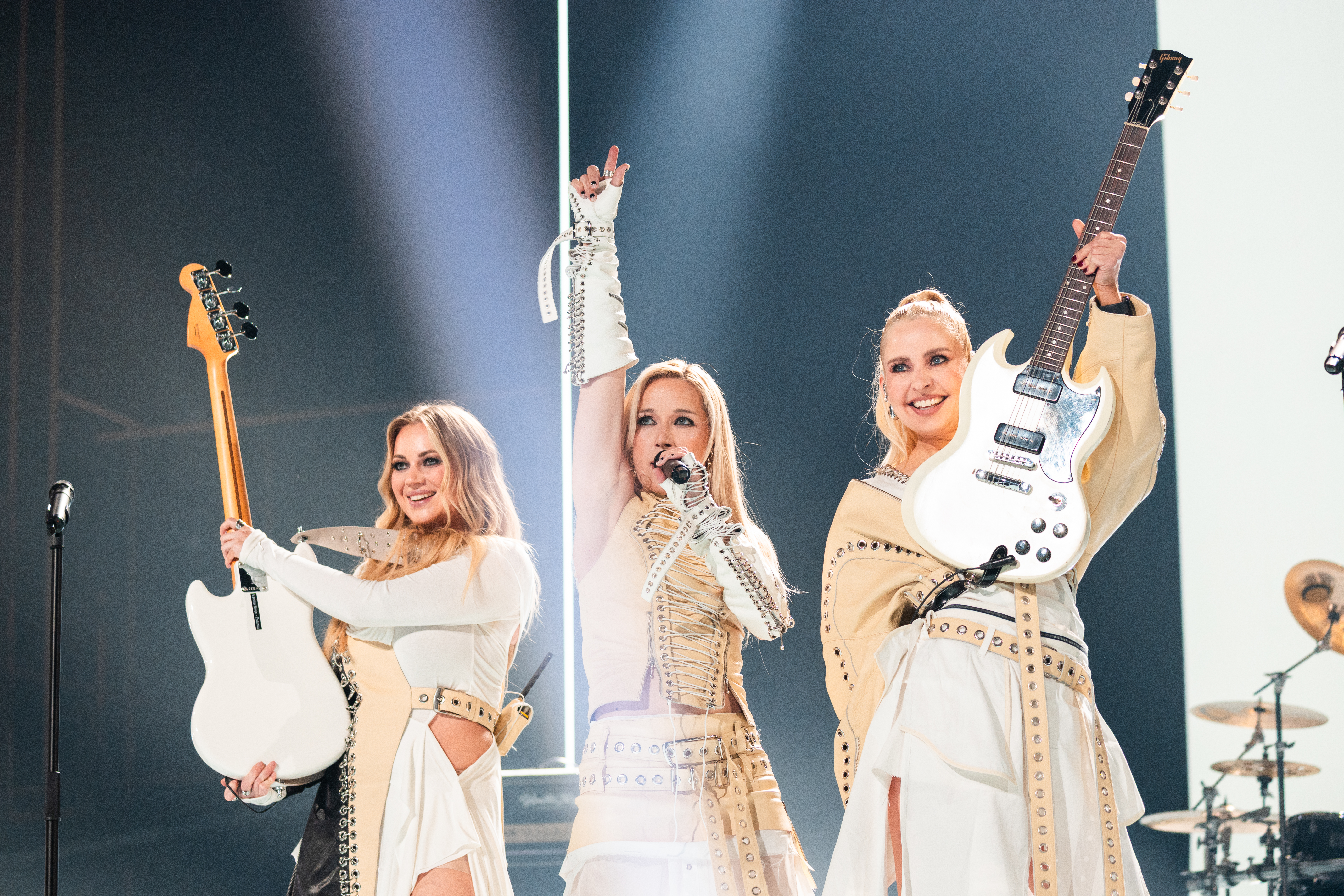
Vanilla Ninja is a three-piece female band formed in Tallinn in 2002. The band is currently formed of Kerli Kivilaan, Lenna Kuurmaa and Piret Järvis, and first shot to fame after their 2003 Eurovision effort “Club Kung Fu”. In 2005, Vanilla Ninja represented Switzerland at the Contest with “Cool Vibes”, finishing in 8th place, earning acclaim across German-speaking countries. The band disbanded in 2008, but reunited in 2026 for Eesti Laul, winning the competition.
The trio’s song for Eurovision 2026 – “Too Epic to Be True” – was written solely by Eurovision hymnmaker Sven Lõhmus.
What are the issues with the selection?
Emma: I’m not a fan of superfinals generally, and Eesti Laul demonstrates exactly why. Reducing everything down to a televote between three songs effectively wipes out the international jury’s influence and can heavily favour the act with the biggest existing fanbase. With Vanilla Ninja already hugely established in Estonia, that was always going to give them an advantage. “Too Epic to Be True” clearly connected with the domestic audience, but I’m not convinced the format did much to find the song with the greatest potential at Eurovision.
Tom: The superfinal format is confusing for Eesti Laul. It is also confusing that the eventual winner would be a song and artist that is mostly known internally, in Estonia. Why didn’t international juries have an impact on final result – either include them or don’t? Otherwise what is the point. I also find it so frustrating on behalf of OLLIE. I’d be tempted to go as far as to say OLLIE should be internally selected for Estonia in future.
Samantha: I personally don’t mind superfinals, which is an unpopular opinion here at TES. I just find Eesti Laul’s superfinal to be badly organised. Eesti Laul is one of my favourite national finals, and I usually like the majority of the songs; this year was no exception. A lot of big acts in Estonia seem to be interested in the contest, which is a nice thing to see. However, there always seems to be one act that’s significantly bigger than the rest and ultimately ends up representing Estonia at Eurovision, largely because of how the superfinal is organised. This year was no exception: Vanilla Ninja performing a Sven Lõhmus song was the obvious winner from a local perspective.
Was the song and act good enough to be in Eurovision?
Emma: Vanilla Ninja are obviously experienced performers and there was nothing completely unsuitable for Eurovision here, but for me the song landed firmly on the cringe side of retro. There’s a fine line between nostalgia that feels fun and something that simply feels dated, and “Too Epic to Be True” never quite crossed that line in the right direction. It was polished enough to be at Eurovision, but in such a competitive field, that wasn’t enough to make it memorable.
Tom: The song could’ve been, maybe, but without the “too epic, too epic” breakdown. Vanilla Ninja have been good enough for the Contest in the past. I’m not sure the live performance of this song was good enough. The vocals were not up to scratch in places, and for such a high energy pop-rock song, the atmosphere on stage was just not there. It felt more like an interval performance than a competing entry somehow.
Samantha: The main issue with Vanilla Ninja’s “Too Epic To Be True” was that it appealed to a nostalgic audience (which explains why it won Eesti Laul), but it struggled to connect with the larger Eurovision fanbase. The song was somewhat fun and catchy; however, it felt forgettable in comparison to the more experimental and distinctive sounds that have performed well at the contest in recent years. The message also failed to resonate strongly, as its attempts to use more youthful language came across as forced rather than genuinely “epic”- pardon the pun.
Did the staging compliment the song and stand out?
Emma: The staging suited the song and there was plenty happening visually, but it never really developed into a memorable television moment. Even the “too epic, too epic” interjection felt like an obvious opportunity to do something ridiculous and, well, “epic”, but the staging never really delivered on it. For a song already relying heavily on nostalgia, it needed the visuals to bring something fresh to the package. It was competent rather than captivating.
Tom: Look the staging wasn’t bad. It was fun, it was eye catching, there was potential there. But there was nothing particularly memorable in a year where so many moments in other acts did stand out. Would more impressive staging have improved Estonia’s qualification chances? I’m not so sure. There were more pressing issues with this entry. But an improvement would have been welcome. Also the slo-mo camera moment was not effective for me personally.
Samantha: The performance was polished, and they felt a lot more comfortable with the staging compared to their Eesti Laul performance. With that said, this was Kerli’s Eurovision debut, whilst Lenna and Piret had previous experience. It was also her debut on a stage of that scale, and you could sense that they were still developing their chemistry as a trio, which maybe made them come across as a bit disconnected.
Could this song have qualified if changes were made?
Emma: I mean, possibly… but I think it would have taken more than a few staging changes! Leaning into the nostalgia was always going to be part of the appeal, but it needed to feel deliberately retro rather than straying onto the cringe side of it. A stronger visual concept and a genuinely “epic” moment might have helped, but I’m not convinced that alone would have been enough.
Tom: Honestly, substantial changes would have to have been made in my opinion, but yes. Possibly. The girls themselves are so likeable, and have given great performances in the past. This just wasn’t a year where I could see them, in this performance, with this song as is, qualifying.
Samantha: Unless we’re talking about changing the whole song, then I don’t think it would have qualified if slight changes were made. I really like Vanilla Ninja and they are incredibly likeable, but the song was just so 2000’s coded which is fine, I still love 2000’s music but it doesn’t cut it for Eurovision.
What are our outlooks for future contests?
Emma: I’m not particularly worried about Estonia. Eesti Laul continues to attract a really varied selection of artists and songs, and I absolutely loved what Estonia brought in both 2023 (Alika “Bridges”) and 2024 (5miinust and Puuluup “(Nendest) narkootikumidest ei tea me (küll) midagi”). I’d happily see some changes to the superfinal format, but otherwise this feels much more like a blip than evidence of any wider problem. Estonia will almost certainly turn up with something completely different next year, and that unpredictability is part of the fun.
Tom: I guess… send OLLIE. Please. But whatever happens, Eesti Laul will be exciting once again in 2027, and I look forward to it!
Samantha: I love Eesti Laul and will always look forward to it. Praying that Nublu takes part one day, the site might be sick of hearing me bang on about it if that does happen. Quick message to OLLIE… Maybe sit the next few out? I don’t doubt you’re a great guy, but I think I’ve reached my quota of seeing mediocre songs make the superfinal.
Watch the accompanying discussion video here:
Estonia’s Eurovision Journey
Estonia has appeared at almost every Eurovision since their debut in 1994. They have won the contest once with Tanel Padar, Dave Benton and 2XL in 2001, singing Everybody. Other notable Estonian entrants include 3rd placer Sahlene with Runaway in 2002 and Ines with Once In A Lifetime in 2000, who placed 4th. More recently, their highest-placing entries have been Urban Symphony with Rändajad in 2009 and Ott Lepland with Kuula in 2012, both of which finished in 6th place.
In 2026, Estonia elected to send 2005 Swiss representative Vanilla Ninja through Eesti Laul to the Contest with “Too Epic to be True”. They failed qualified for the final, ultimately finishing in 11th place in the first semi-final with a total of 79 points. Of these, 46 came from the televote – while the remaining 33 came from the jury.
What do think about our thoughts? Do you think Estonia could have qualified? Let us know in the comments or on social media! Be sure to follow ‘That Eurovision Site’ on Twitter, Facebook, Instagram, TikTok, Threads and Bluesky as we prepare for Eurovision 2027!
Source: That Eurovision Site
Image Credit: Corinne Cumming / EBU