
Now Eurovision 2026 is firmly behind us and we’ve had a chance to properly digest the wild ride of Vienna, it’s now time to discuss What Went Wrong. We’ve all had a chance to mull over the results of the contest. The Eurovision 2026 final saw some very dramatic results, but 6 acts in particular had noticeably bad results.
In our ninth part Tom, Emma, and Kittens discuss what went wrong with Cosmó.
Who is Cosmó?
COSMÓ is the stage name of Benjamin Gedeon, a 19-year-old singer born in Budapest, Hungary. Growing up on the Austrian-Hungarian border, he became invested in music as a child, learning how to play the piano at the age of four. He wrote his first song when he began to take singing lessons at 13. He shot to fame in 2022 when he auditioned on the German version of The Voice Kids, reaching the final under the guidance of Alvaro Soler. After this, he began to lean into various genres, exploring his personal musical style. Ahead of the Austrian national selection, he adopted the moniker ‘COSMÓ’.
His song to sing on home soil – “Tanzschein” – was written by Benjamin himself, alongside Elias Stejskal and Ella Stern.
What are the issues with the selection?
Tom: Ah nowt. Cosmó is amazing, and so young. This was a great host entrant. Would I have liked to see other songs win the national final at the time? Sure. Do I now think the “Tanzschein” dance is one of the best moments of the Grand Final? Absolutely. I’m glad Austria gave us a national final for the year the hosted the Contest, and am glad they are returning to an internal selection in 2027.
Emma: I don’t think there was anything fundamentally wrong with the selection. Cosmó brought something genuinely distinctive, and “Tanzschein” had a unique sound and personality that made it an interesting, if slightly risky, choice. As the host nation, Austria were also in the rare position of being able to take that risk without quite the same pressure to chase a result. And ultimately, it gave us the “Tanzschein” dance. Who doesn’t love an instructional dance?
Kittens: The national final was honestly a bit of a farce – I would have thought they would have had so, so much more to offer, especially in a Eurovision winner year. I’d much rather they went internal than do this, and thankfully they are looking at doing that for next year. However did a good song win? Absolutely yes. Cosmó has a lot of things going for him and I think there was a lot of good energy there.
Was the song and act good enough to be in Eurovision?
Tom: Yeah, sure. Austria was never going to win this year. I think it’s almost impossible for a country to win back to back these days. So it was almost the perfect act and perfect song to be in Eurovision for Austria this year. It was a great host entry.
Emma: Absolutely. It was distinctive, well produced and unlike anything else in the contest, with Cosmó bringing plenty of personality to a song that could easily have been difficult to sell. The unusual style was always going to divide opinion, but Eurovision is much more interesting when countries are willing to send something that doesn’t sound like everything else.
Kittens: I think the song was probably perfect as a host entry, and in terms of getting something people could rally behind and ‘use’ it was really good. The subject matter seems very ‘real’ and it’s not a subject that gets talked about often in music, so nice to see something a bit more unique. I don’t think there was much of a problem with the physical performance of the song either – although it’s helped by some of it being almost spoken.
Did the staging compliment the song and stand out?
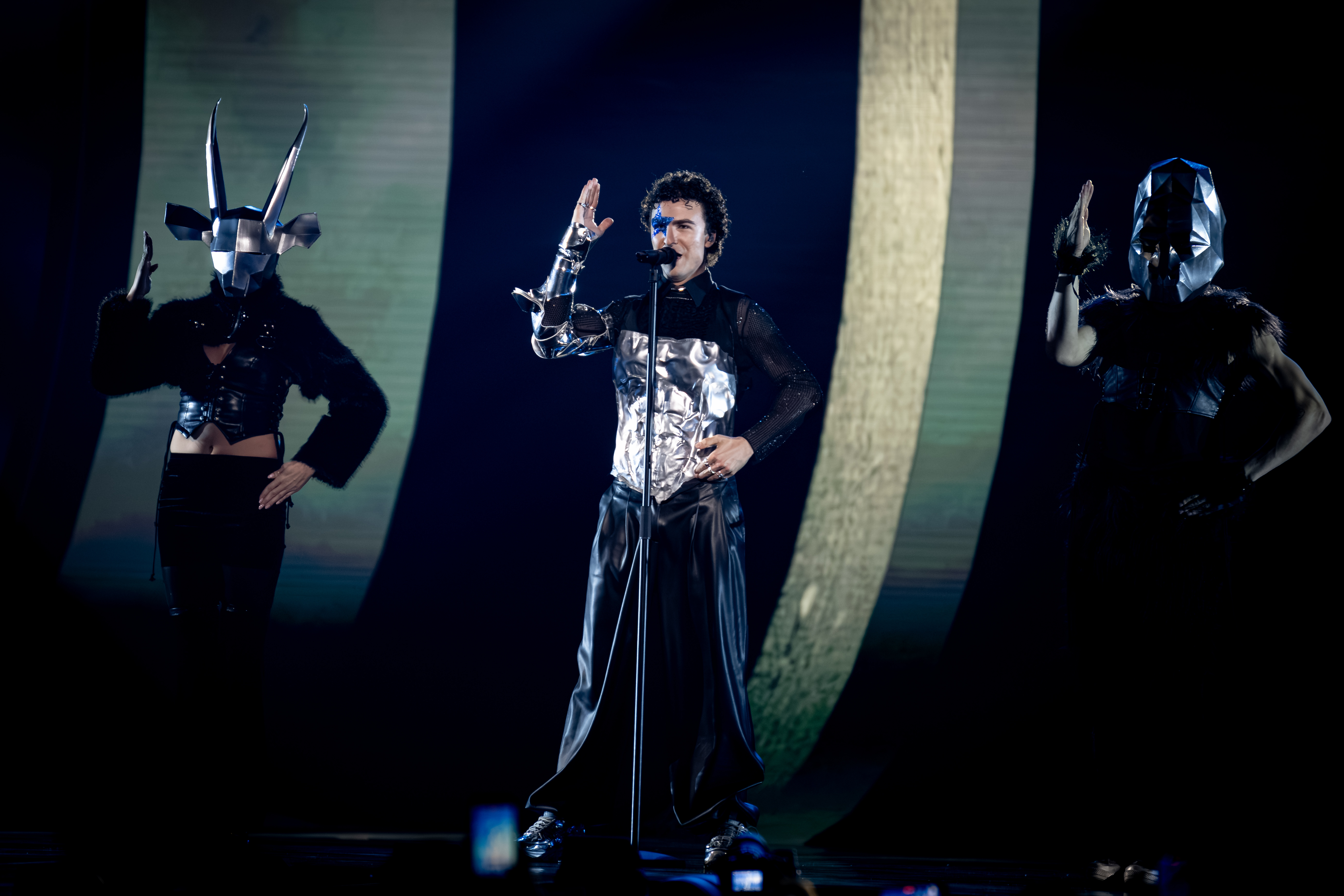
Tom: I actually think the staging was perfect. It was both cool and modern, and referential and retro. The dance is great and easy to pick up. Cosmó is cool and incredibly likeable. The ‘VIEN’ shout moment, followed by the roar really amplified the staging and costuming decisions. As a finished packaged, this was enjoyable.
Emma: I really enjoyed the staging. It was slick, colourful and slightly retro, and the choreography gave the performance an identity that was instantly recognisable. The “Tanzschein” dance was obviously the standout moment, although I do think some of the song’s meaning got lost amongst all the fun. It certainly wasn’t forgettable, though.
Kittens: Sadly I think what failed with this one is just storytelling. The song tells a very specific unique story, with lots of fun features, and the dance was cool (I do not care if you think it’s cringe!) and I think it was performed well. I just don’t think it communicated the message well. A casual non-German speaking viewer just didn’t have enough to interpret it and that’s where it fails. If you can’t tell what the story is in those 3 minutes – you’re lost. However, it was so enjoyable and they had clearly put some thought into it, so I’ll give it a pass on a general basis.
Would this song have qualified from this year’s semifinals?
Tom: I really want to say yes, because I love it, but looking at what failed to qualify – I’m not so sure. But I also don’t think Austria would have necessarily sent this, had they not been hosting this year.
Emma: I actually think it could have scraped through. It was distinctive enough to stand out in a semi-final and the dance gave viewers something immediate to remember, even if the song itself wasn’t the most accessible. I certainly wouldn’t have called it a safe qualifier, but I wouldn’t have written it off either.
Kittens: I’d like to hope it would have, if they had managed to get some momentum, but I think even if it had it might have been low in the qualifiers. It feels like it would maybe have struggled to pick up votes against other offerings- and the result in the final shows that.
What are our outlooks for future contests?
Tom: Keep calm and carry on. Austria are coming off a recent win. The country is going back to an internal selection. Let’s see what happens! There are absolutely no reasons to panic for the Austrian delegation after this year’s results.
Emma: There’s really no reason to worry about Austria after one disappointing result, particularly when they came into this contest as the reigning champions. They’ve shown they’re willing to take risks and send genuinely interesting artists, and returning to an internal selection gives them plenty of opportunity to keep doing that. One slightly bonkers host entry shouldn’t change much – more of the same, please!
Kittens: Internal selection really is the best way forward for Austria until they work out what they’re doing. I think their identity at Eurovision is rather weak, and their successes feel like happy accidents rather than any concerted strategy. And without the momentum of hosting, i don’t think they’ll get the same interest. Here’s hoping they can pull a great artist for next year out of the bag.
Watch the accompanying discussion video here:
Austria’s Eurovision Journey
In 1957, Austria made their debut into the Eurovision Song Contest, where Bob Martin represented the landlocked nation with the song “Wohin, kleines Pony?”. At the close of voting, it managed to place 10th overall. Since their debut, Austria has participated 56 times (being in the final 49 times), and – before 2025 – had won the competition on two occasions in 1966 and 2014.
In 2026, Austria selected COSMÓ to represent the nation on home soil with “Tanzschein”. Being the host country, Austria automatically qualified for the final – where COSMÓ would ultimately finish in 24th place with 6 points. One point came from the jury while another five came from the televote.
What do think about our thoughts? Do you think Austria could have done better? Let us know in the comments or on social media! Be sure to follow ‘That Eurovision Site’ on Twitter, Facebook, Instagram, TikTok, Threads and Bluesky as we prepare for Eurovision 2027!
Source: That Eurovision Site
Image Credit: