
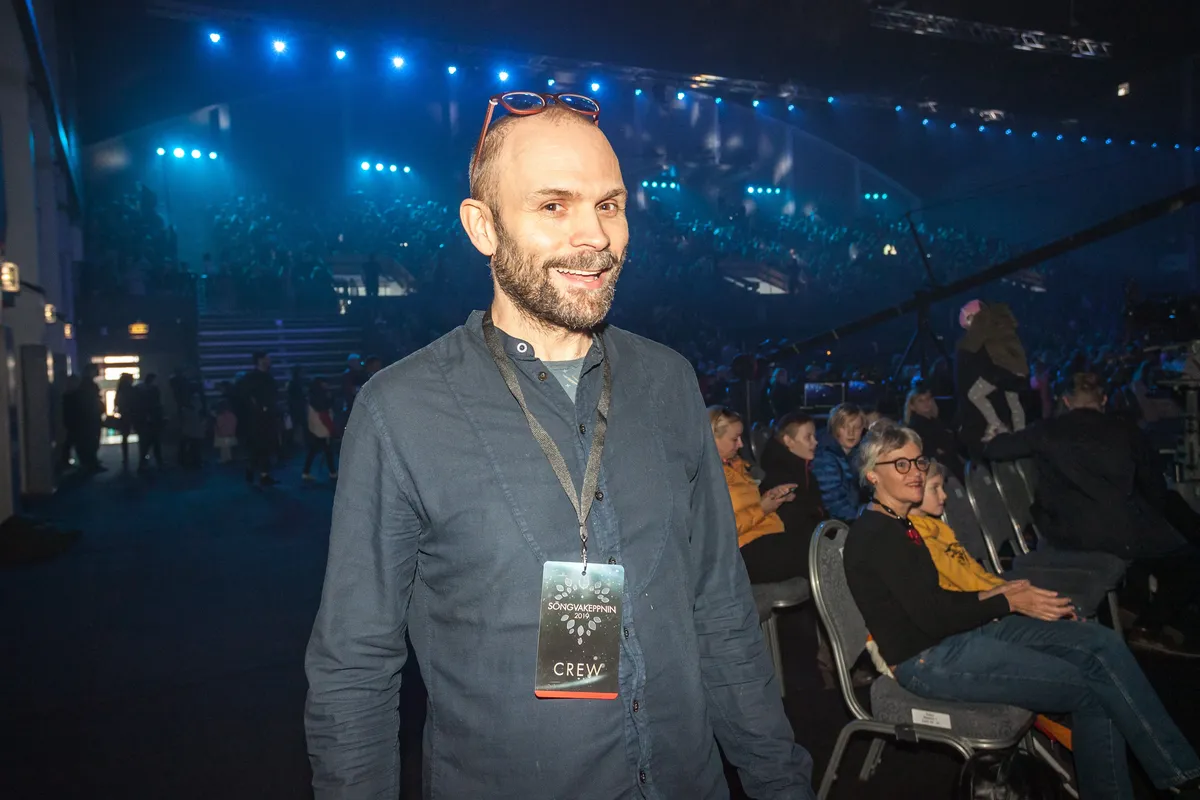
Iceland’s Head of Delegation for Eurovision has changed, with Rúnar Freyr Gíslasson taking on the role from Felix Bergsson.
Who is Rúnar Freyr Gíslasson?
Rúnar has been a part of the Icelandic delegation for quite some time. In previous editions of the Contest, Gíslasson was primarily the Head of Press, liaising with media outlets.
However, Rúnar has been promoted to the Head of Delegation following a number of changes from within the delegation itself. Iceland’s commentator Gísli Marteinn announced he would be reprising his role in Malmö, due to the inclusion of Israel in the Contest.
Similarly, Iceland’s usual Head of Delegation Felix Bergsson is on leave from his post at RÚV. This is due to the fact that Bergsson’s husband – Baldur Þórhallsson – is running for President of Iceland and may cause a conflict of interest. As a result, the role has been passed to Rúnar, who currently works as a project manager at the broadcaster.
As well as this, songwriter Ásdís María Viðarsdóttir has ruled herself out of going to Eurovision with the delegation. This is due to her belief that second-placed Bashar Murad should have represented the nation in Malmö instead of winner Hera Björk. Speaking on the issue, she explained:
En ég mun ekki fylgja laginu út í lokakeppnina ef af því verður. Samviska mín leyfir það bara ekki.
But I won’t follow the song to the finals if that happens. My conscience just doesn’t allow it.
Ásdís María Viðarsdóttir, songwriter for “Scared of Heights”
Iceland’s Eurovision journey
Iceland made its debut on the Eurovision stage in 1986, finishing 16th with the song “Gleðibankinn” (Bank of Fun) by ICY. In their 35 appearances, Iceland has finished in top 10 an impressive 7 times. Their best result to date is second place, which they have achieved twice. The first time was in 1999, where Selma Björnsdóttir received 146 points for her performance of “All Out of Luck”. The second time was in 2009, with Yohanna singing “Is It True” and receiving 218 points.
Iceland’s most recent representative on the Eurovision stage was Diljá, singing “Power” in Liverpool. At the close of the voting, Diljá finished 11th in the semi-final with 44 points from the televote. This meant that Iceland missed out on qualifying for the final.
What do you think of Rúnar’s promotion? Do you think he can bring a Eurovision victory to Iceland in the coming years? As always, let us know what you think by commenting below. Also, be sure to follow ‘That Eurovision Site’ on Twitter, Facebook, Instagram, TikTok, Threads and Bluesky as we head towards rehearsals for Eurovision 2024!
News Source: mbl.is
Photo Credit: RÚV / Mummi Lú
 Thomas James
  Samantha
  DimaGorbatenko05