
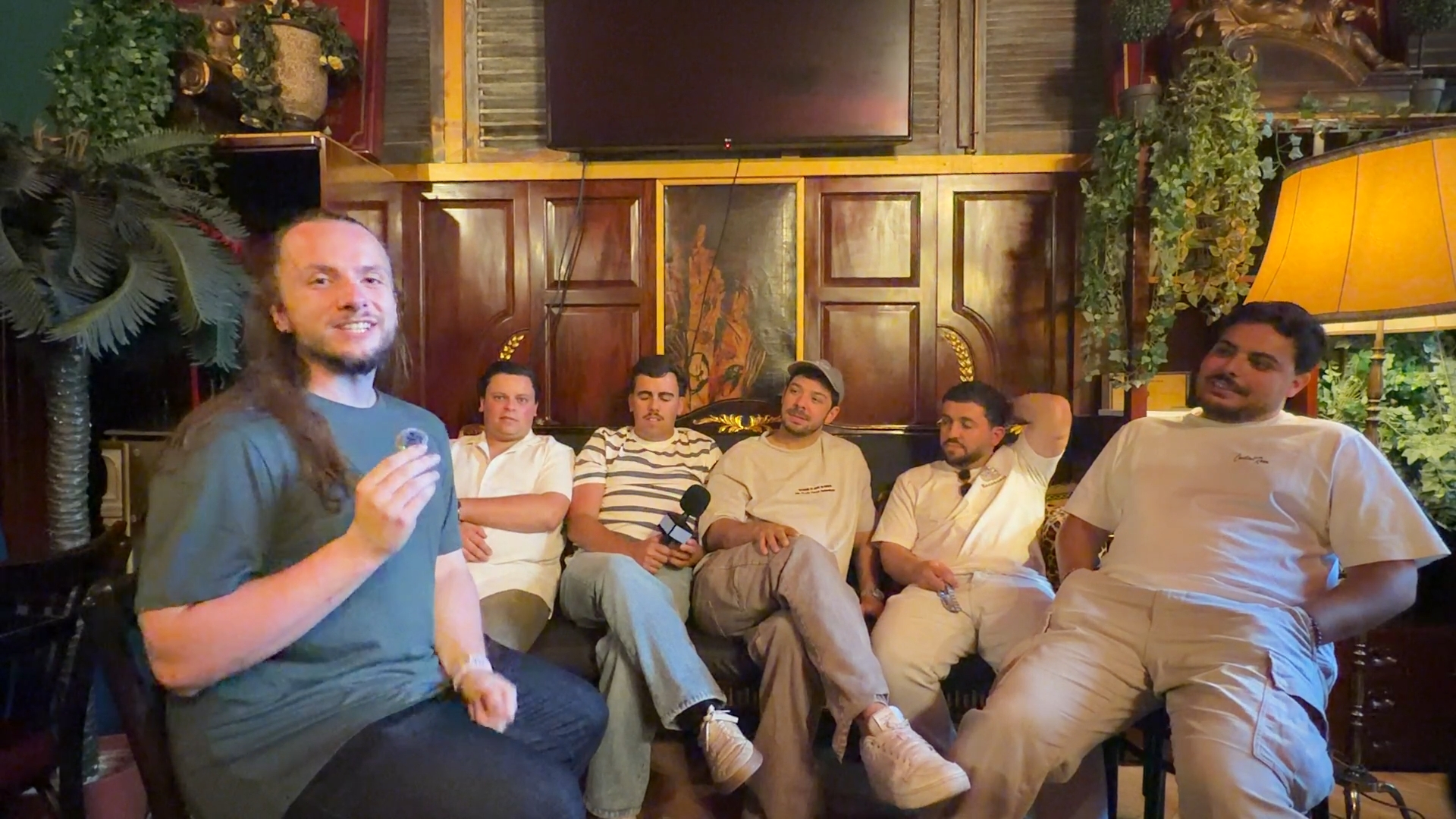
Ahead of Eurovision 2026 in Vienna, Rory had the opportunity to speak with Bandidos do Cante, who will represent Portugal at Eurovision 2026 with the song “Rosa”.
Check out our interview with Bandidos do Cante here!
In the interview, the group talked about how the rehearsals went, the changes from Festival da Canção, and how important it is to show their local culture to the world.
Who are Bandidos do Cante?
Bandidos do Cante are a five-piece vocal group from the Alentejo region of Portugal. Forming in 2022, the band is made up of Miguel Costa, Duarte Farias, Francisco Pestana, Francisco Raposo and Luís Aleixo. The band first released covers, before debuting original music in 2024, with their song “Amigos Coloridos” becoming the most listened to song on national radio for some time. The band released their first album in January 2026, right before their Festival da Canção participation.
Portugal’s Eurovision Journey
Portugal debuted in the Eurovision Song Contest with António Calvário’s “Oração” in 1964. Since then, Portugal has participated in the competition 55 times – appearing the final 46 times. Their only win in the competition came in 2017 with Salvador Sobral, performing his heart-wrenching song “Amar Pelos Dois”.
Portugal’s most recent participation was with NAPA with the song “Deslocado”. The band managed to qualify for the Grand Final and once there, they finished in 21st place. They received a total of 50 points, of which 37 points came from the jury and 13 points came the televote.
What do you think of our interview with Bandidos do Cante? Are you excited to see Portugal at Eurovision 2026? As always, let us know what you think by commenting below. Also, be sure to follow “That Eurovision Site” on Facebook, Instagram, Twitter, TikTok, Tumblr, Threads and Bluesky as we gear up for Eurovision 2026!
News Source: That Eurovision Site
Photo Credit: That Eurovision Site
 Rory Gannon
  Thomas James